NeuroSims
Interactive simulations for visualizing neuroscience concepts
Each simulation runs in the browser, with nothing to install. They were built for Introduction to Neuroscience (PSB 2000) at Florida State University, and any teacher or student is welcome to use them.
Cells of the Nervous System
The building blocks: what neurons look like, how their shapes differ, and how a signal travels through each one. A good place to start.
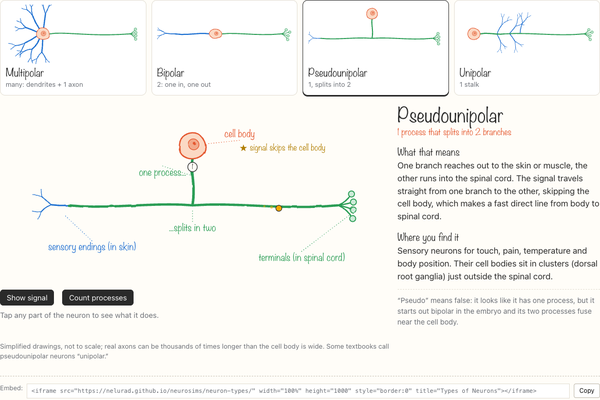
Neurophysiology
How a single neuron fires, and how it passes the message to the next one. Start with the action potential, then move to the synapse.
The Salty Banana
A step-by-step story of the action potential: resting potential, threshold, spike, refractory period, and myelin.
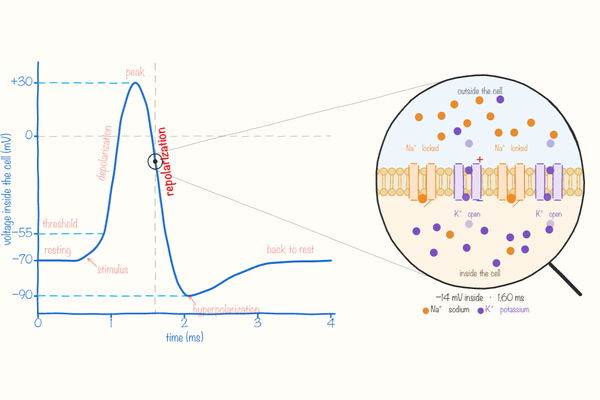
The Action Potential Graph
Click anywhere on the action potential curve to zoom in on the membrane and see which sodium and potassium channels are open at that moment.
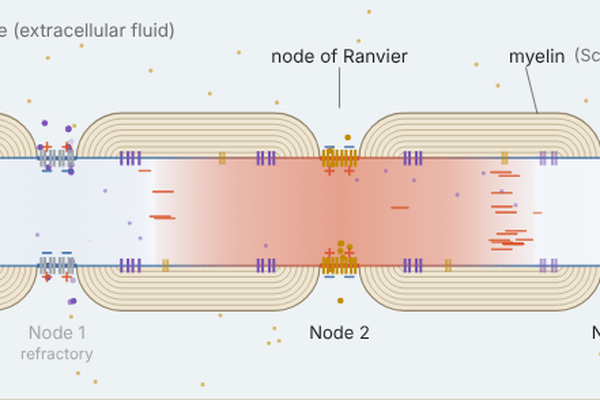
Saltatory Conduction
Why the action potential seems to "jump" from node to node along a myelinated axon, and what happens when myelin is damaged.
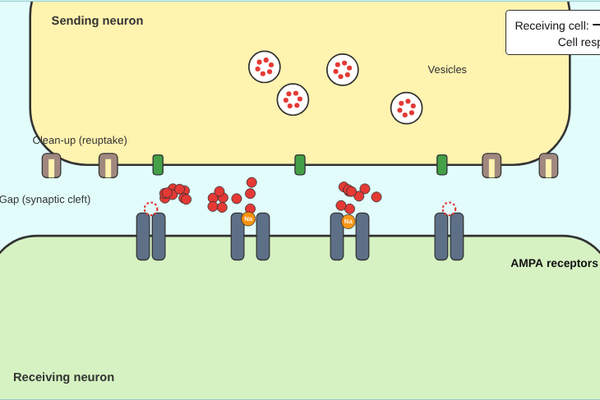
Exploring Synapses
Release a neurotransmitter, watch it cross the gap, and see how receptors and drugs change the receiving cell.
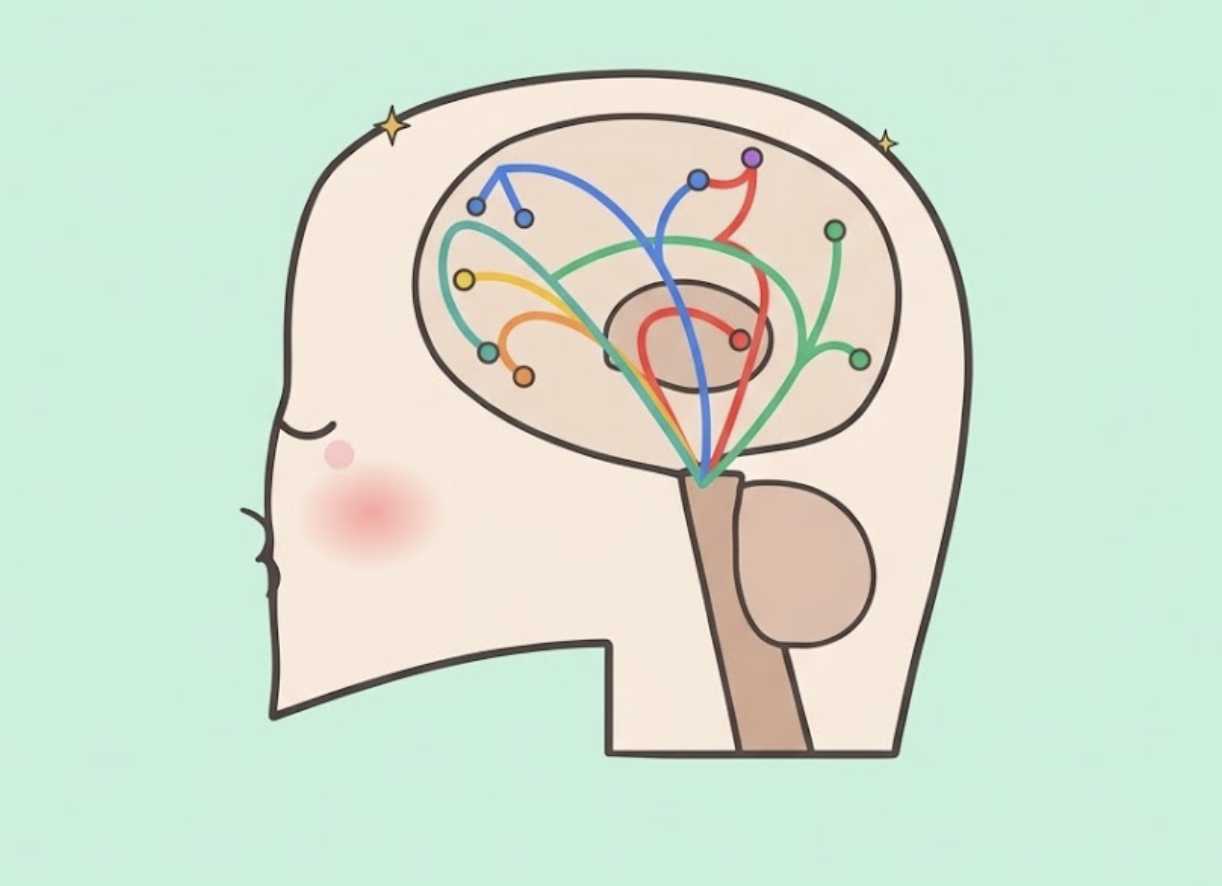
Neurotransmitter Pathways
Pick a neurotransmitter and watch where it starts in the brain, where its fibers travel, what they do, and what happens when they go wrong.
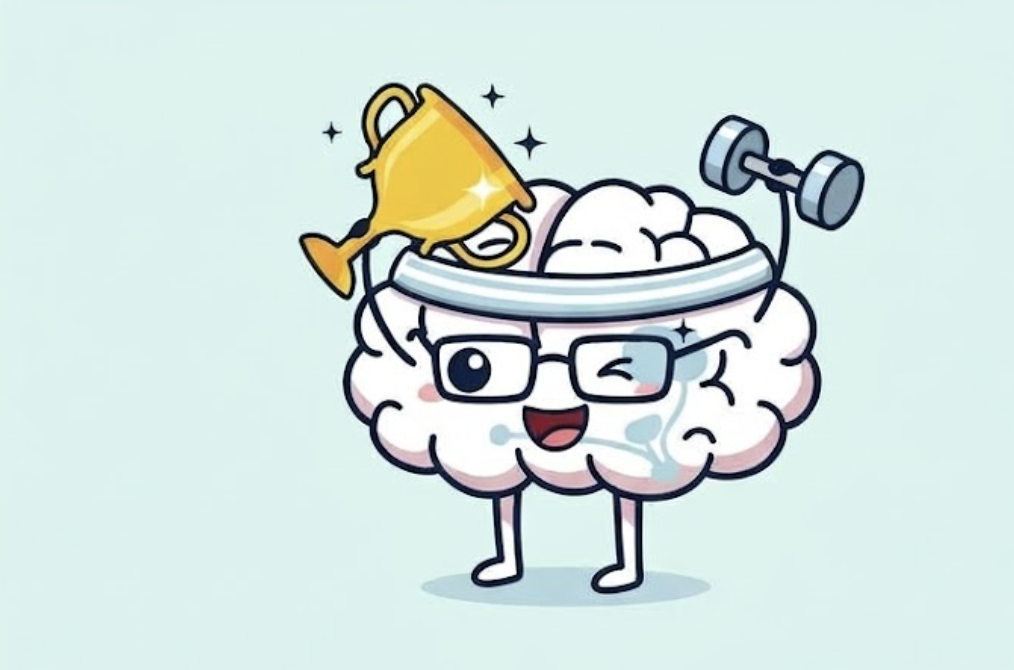
Dopamine: Movement vs. Motivation
Trace dopamine's two big pathways, one for movement and one for reward, and see what happens when each goes wrong.
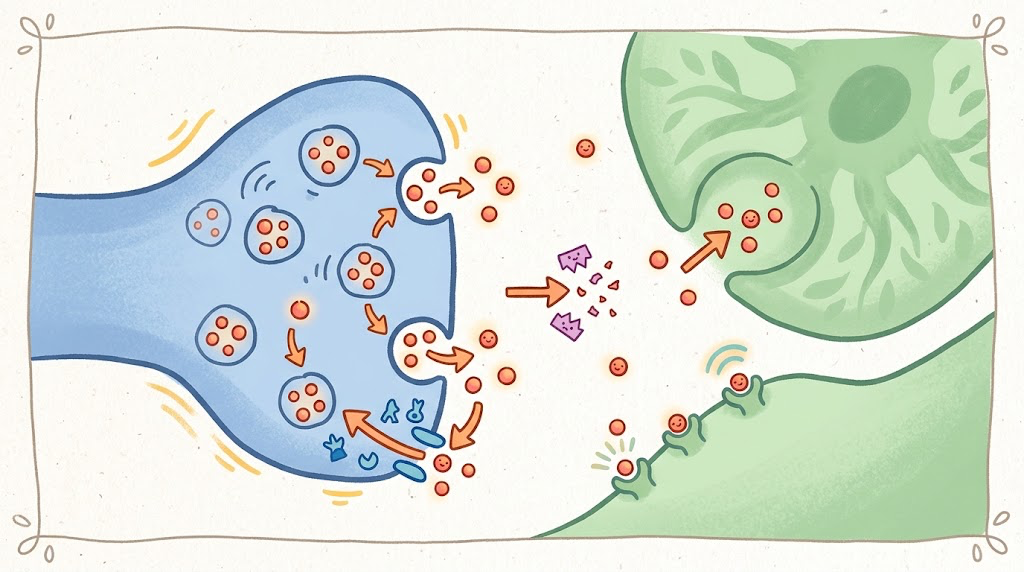
Clearing the Synapse
See the three ways a synapse gets cleaned up after a signal: reuptake back into the neuron, enzymes breaking the transmitter apart, and diffusion away from the gap. Then see what happens when a drug blocks one of them.
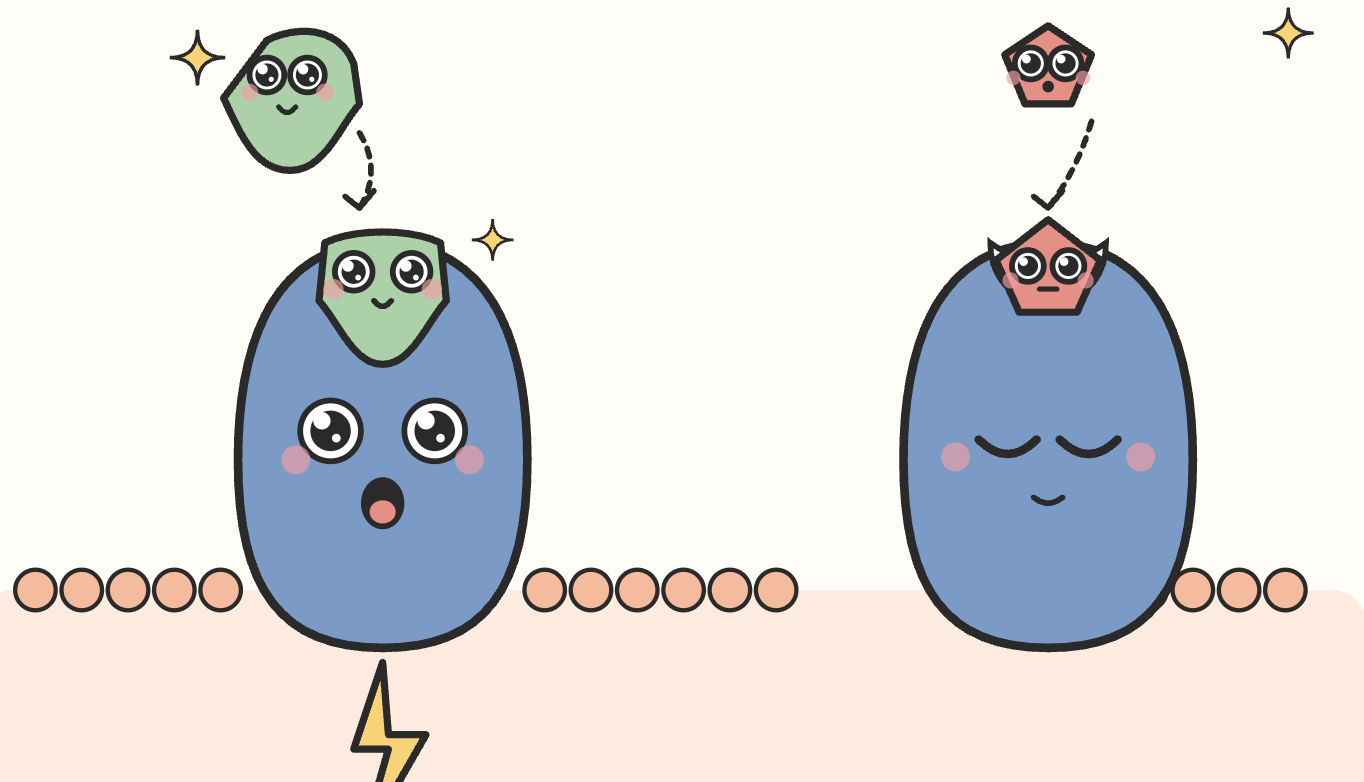
Receptor Mechanisms
See the three ways a synapse gets cleaned up after a signal: reuptake back into the neuron, enzymes breaking the transmitter apart, and diffusion away from the gap. Then see what happens when a drug blocks one of them.
Developmental Neuroscience
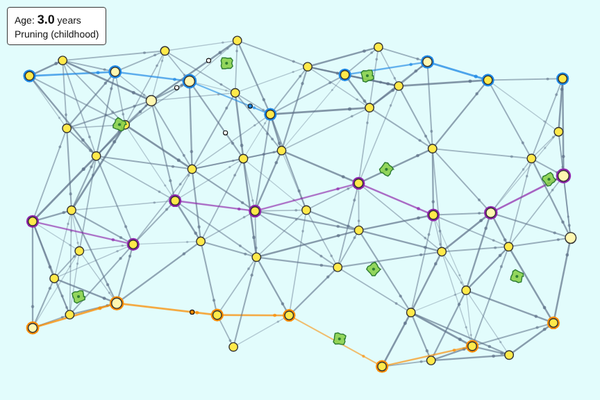
How the brain builds and refines its wiring from birth through adolescence.
More modules coming soon. Ideas for a topic? Suggest one through GitHub Issues.